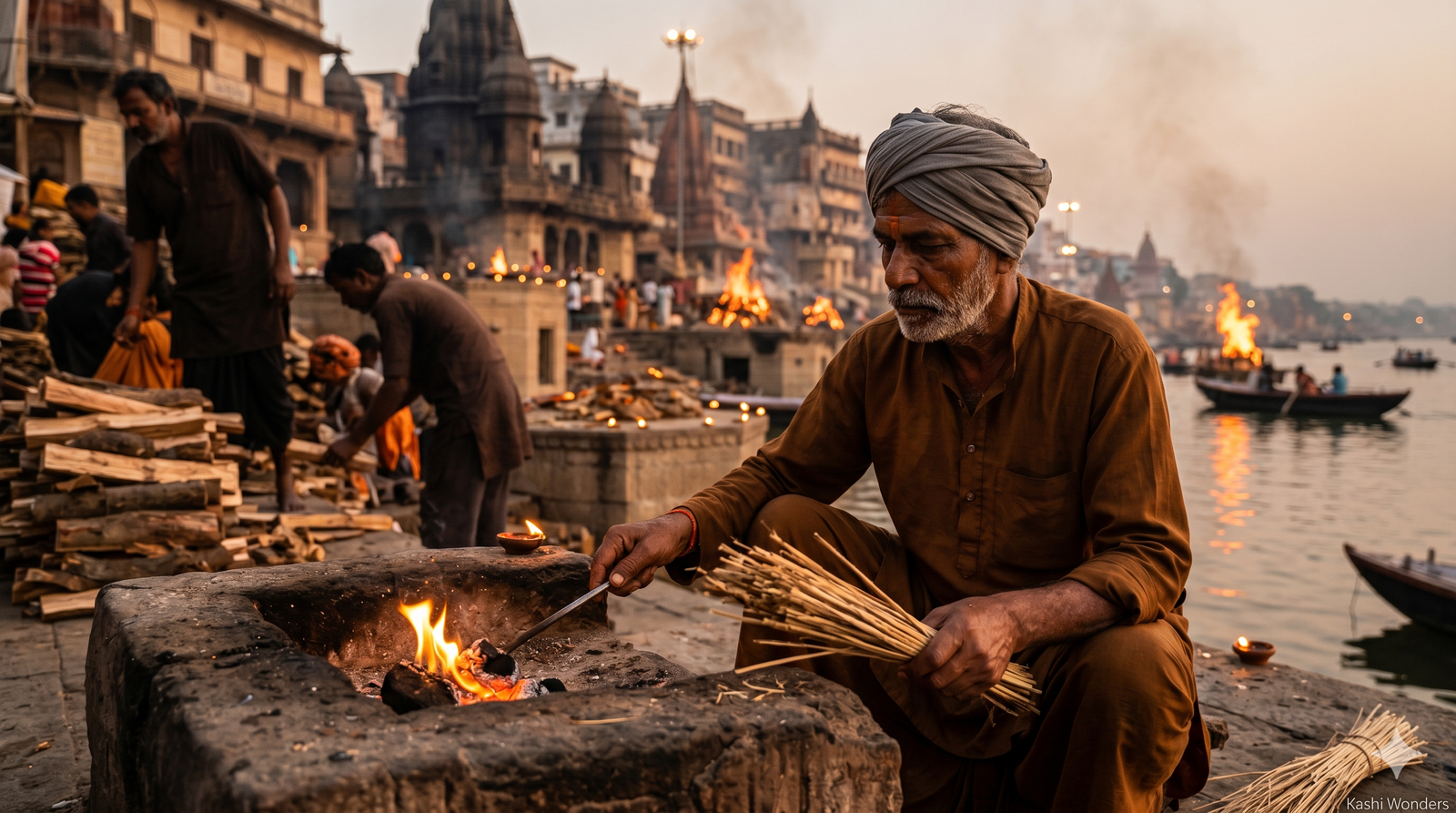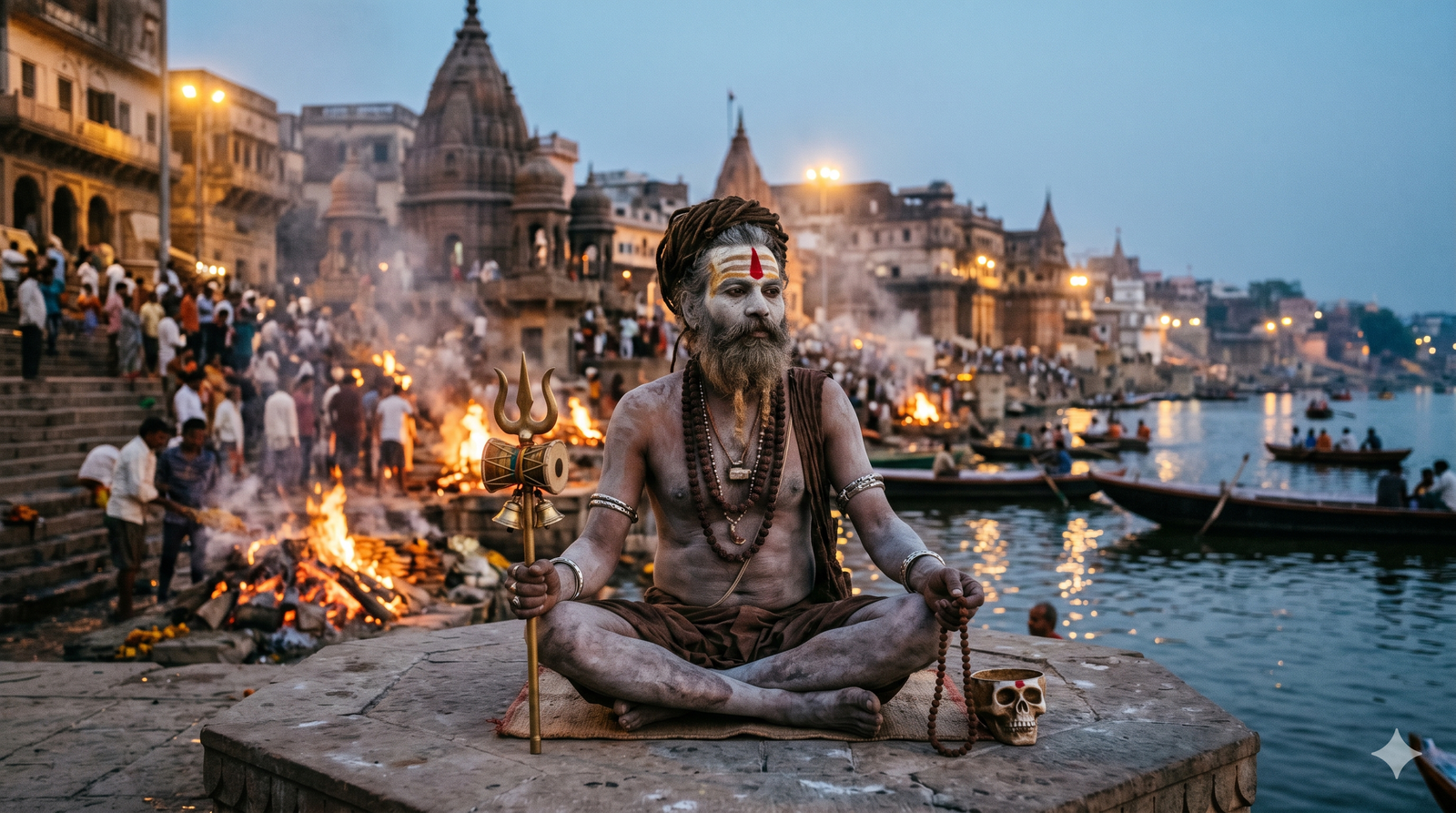
The air around the cremation pyres of Varanasi is heavy—thick with the scent of burning wood, clarified butter, and the reality of human mortality. It is here, amidst the smoke of Manikarnika, that you might encounter the most misunderstood figures of the spiritual world: the Aghori. Clad in minimal clothing, their bodies often smeared with the sacred ash (vibhuti) of the dead, they represent a path that most dare not walk.
The Philosophy of Non-Duality
To the casual observer, Aghori rituals can seem shocking. However, at the core of Aghori Tantra is the concept of Advaita (non-duality). While the average person sees the world in binaries—pure and impure, life and death, beautiful and ugly—the Aghori believes these are mere illusions of the ego.
By consuming "impure" substances or meditating upon corpses, they are intentionally breaking the chains of social conditioning. If everything originates from the Divine, they argue, how can anything be "unclean"?
Life at the Mahashmashana (The Great Cremation Ground)
Varanasi is not just a city; it is the Mahashmashana, the great cremation ground where Lord Shiva grants liberation. The Aghoris choose to live here because the proximity to death serves as a constant reminder of the impermanence of the physical form.
When you walk past the Kinaram Ashram (the spiritual headquarters of the sect), you aren't just seeing "ascetics"; you are seeing practitioners who have performed the Shava Sadhana—meditation seated upon a body. This isn't out of a lack of respect for the dead, but rather a profound recognition that the soul has departed, leaving behind only the five elements.
Common Myths vs. The Reality
In the age of sensationalist documentaries, the Aghori are often portrayed as "cannibals" or "dark sorcerers." The reality is far more nuanced:
- The Myth: They are aggressive and dangerous.
- The Reality: Most authentic Aghoris are deeply reclusive. They are often healers, with the Kinaram Ashram having a long history of treating leprosy patients whom society had abandoned.
- The Myth: Everyone in a black robe is an Aghori.
- The Reality: Many "pretenders" dress the part at the main Dashashwamedh Ghat to collect money from tourists. A true Aghori rarely asks for anything.
💡 The Insider’s Secret
If you wish to see the authentic side of this path without the "tourist trap" vibe, visit the Baba Kinaram Sthal in Ravindrapuri. It is the world’s most important Aghori pilgrimage site. Unlike the ghats, it is peaceful, clean, and houses a sacred pond (Krim Kund) believed to have healing properties. Go during the evening Aarti for a powerful, grounding experience.
Practical Essentials
| Detail | Information |
|---|---|
| Primary Locations | Manikarnika Ghat, Harishchandra Ghat, Kinaram Ashram (Ravindrapuri) |
| Photography | Strictly Prohibited at cremation grounds. Always ask for permission elsewhere. |
| Etiquette | Maintain silence; do not stare or point. Avoid offering money; offer fruit or incense if invited. |
| Best Time to Visit | Early morning or late night (for the most intense spiritual atmosphere). |
FAQ
Are Aghoris followers of Lord Shiva?
Yes. They are devotees of Shiva in his form as Bhairava. They believe that by mimicking the lifestyle of Shiva—the ultimate ascetic who dwells in cremation grounds—they can achieve Moksha (liberation).
Is it safe to talk to an Aghori?
Generally, yes, but use your intuition. Authentic Aghoris may be indifferent to you or speak in riddles. Avoid those who aggressively demand money for photos; these are rarely genuine practitioners of the path.
Why do they smear ash on their bodies?
The ash, or Bhasma, represents the final remains of the human body. It serves as a reminder that our physical existence is temporary and that we will all eventually return to the earth.
Also Read
- The Significance of Manikarnika Ghat: The Gateway to Liberation
- Understanding the Dom Community: The Keepers of the Eternal Flame
- A Guide to the Secret Temples of Varanasi's Hidden Alleys
- Shaivism in Kashi: From Vishwanath to the Aghoris
Plan your spiritual journey with local expertise: