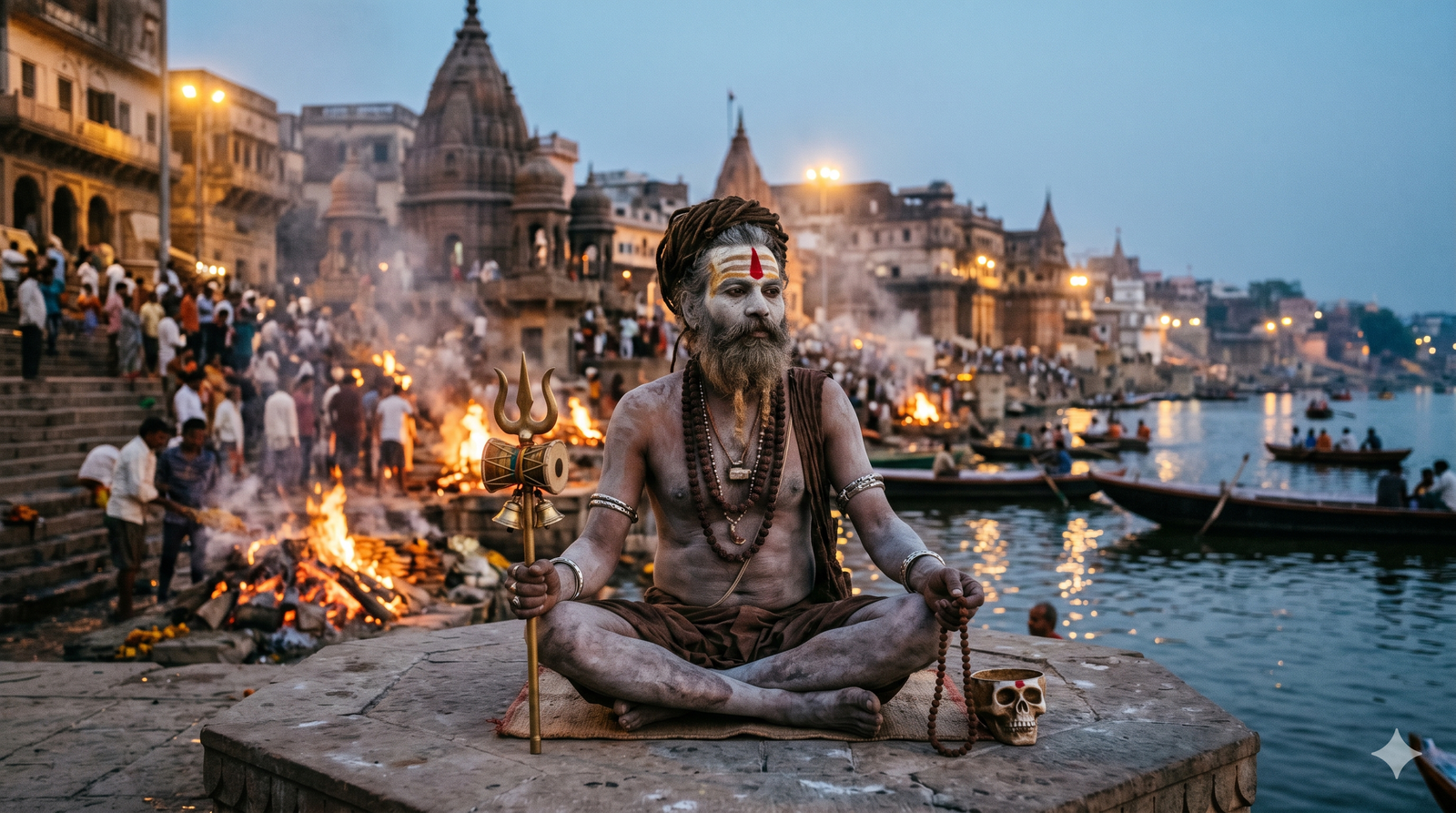
The air at Manikarnika Ghat is thick, a heavy mix of sandalwood, burning wood, and the salt of the Ganga. While tourists often watch the flickering pyres from a distance on boats, the true soul of this place rests in the hands of the Dom community. They are not merely workers; they are the gatekeepers of Moksha (liberation). To understand Varanasi, you must understand the Doms.
The Legend of Raja Harishchandra and the Dom Raja
The authority of the Doms isn't just social; it is rooted in ancient Puranic lore. Local elders will tell you the story of King Harishchandra, who sold himself into slavery to a Dom named Kallu to uphold the truth.
Today, the head of the community is known as the Dom Raja. The family lineage is so respected that no fire can be lit for a funeral pyre without the consent—and the spark—from the Dom Raja’s hearth. When you see the massive, multi-story haveli of the Dom Raja overlooking the Ganga, guarded by stone tigers, you realize this is a dynasty built on the most somber of duties.
Life at the Mahasmashana (The Great Cremation Ground)
Walking through the narrow, soot-stained lanes leading to Manikarnika, you’ll see members of the community managing logs of stackable wood (Peepli, Mango, or Sandalwood). Their life follows the rhythm of the pyre.
- The Eternal Fire: At the heart of their duty is the Akhand Dhuni—the fire that has reportedly burned for centuries.
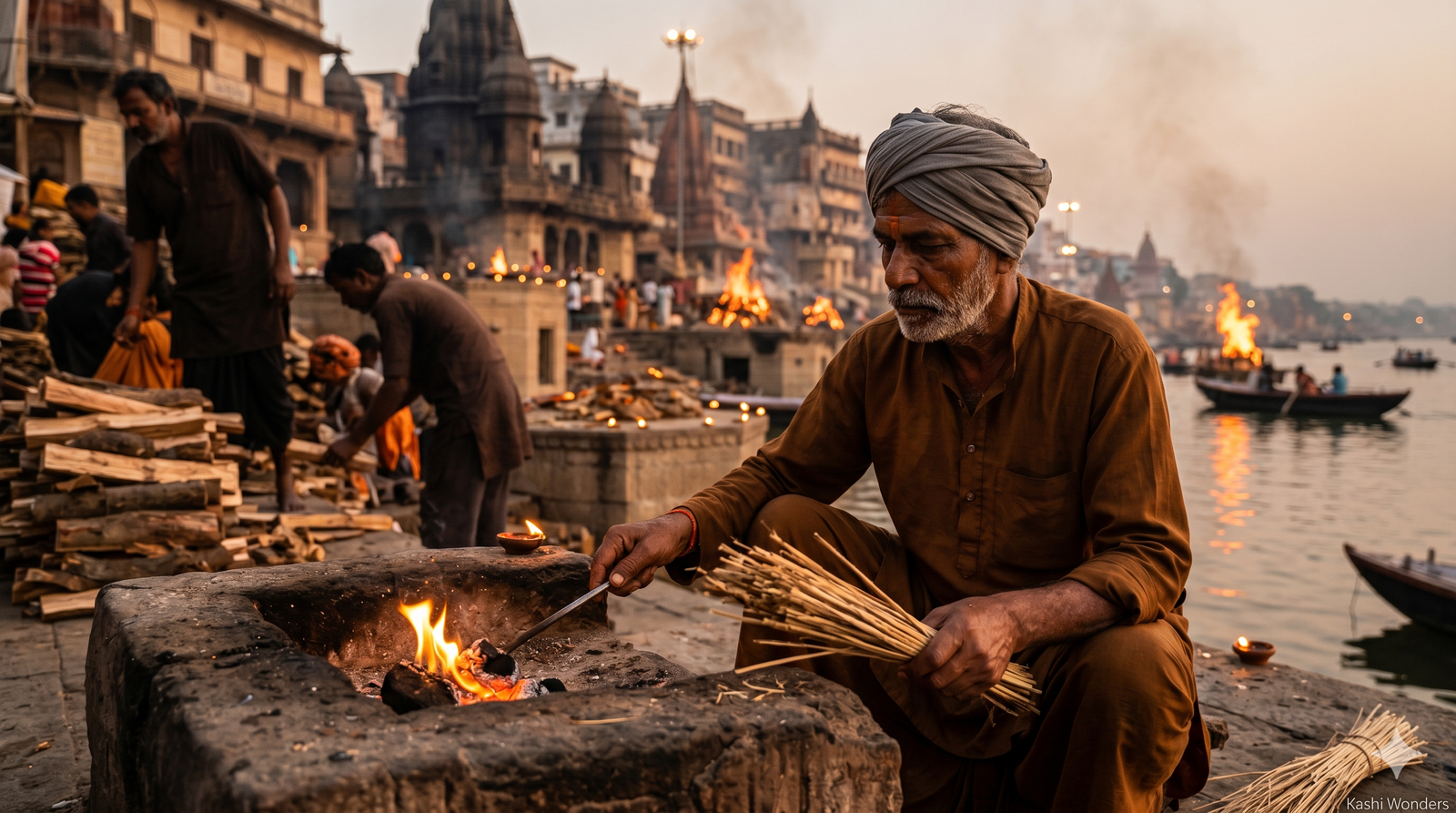
- The Ritual: It is a Dom who hands the burning bundle of straw to the "Mukhagni" (the chief mourner) to start the cremation.
- The Sifting: Once the fires cool, members of the community perform the final task of sifting through the ashes, returning the remains to the Ganga, and occasionally finding gold or jewelry left behind—a traditional right granted to them for their service.
Beyond the Stigma: A Spiritual Necessity
In the complex social fabric of India, the Doms were historically marginalized, yet in the hierarchy of Kashi’s spiritual economy, they are indispensable. Without them, the cycle of life and death in the holy city would come to a standstill. There is a raw, gritty honesty in the way they work; they see death not as a tragedy to be feared, but as a daily, tangible reality.
💡 The "Insider’s Secret" Box
Most visitors think the fire is started with a simple matchstick. It never is. If you watch closely from a respectful distance, you will see the family member of the deceased approach a specific stone hearth managed by the Doms. They pay a fee (often including a piece of cloth or grain) to receive a bundle of burning reeds. That flame is the same one that has been kept alive by the Dom family for generations.
Practical Essentials
| Category | Details |
|---|---|
| Location | Primarily Manikarnika Ghat and Harishchandra Ghat, Varanasi. |
| Observation Ethics | Maintain a distance. Photography of funeral pyres is strictly prohibited and highly disrespectful. |
| Dressing Code | Modest, somber clothing. Cover shoulders and knees. |
| Best Way to Reach | Walk through the Chowk area into Vishwanath Gali, or take a boat to Manikarnika Ghat. |
FAQ
Q: Can I talk to members of the Dom community?
A: Yes, they are part of the city's daily life. However, avoid bothering them while they are performing cremation rituals. Many are open to sharing stories if approached respectfully in the nearby tea stalls.
Q: Is the Dom Raja a real title?
A: Absolutely. It is a hereditary title held by the head of the community who manages the logistics and spiritual "rights" of the cremation grounds.
Q: Do I need to pay the Doms if I am just visiting?
A: No. However, you may encounter "guides" asking for "wood donations" for the poor. Be cautious; while genuine charities exist, many of these are aggressive tourist traps. It is better to observe quietly and move on.
Also Read
- The Rituals of Manikarnika Ghat: A Guide to the City of Death
- Understanding the Aghori: Path of the Left Hand in Varanasi
- Top 10 Spiritual Experiences in Kashi You Cannot Miss